
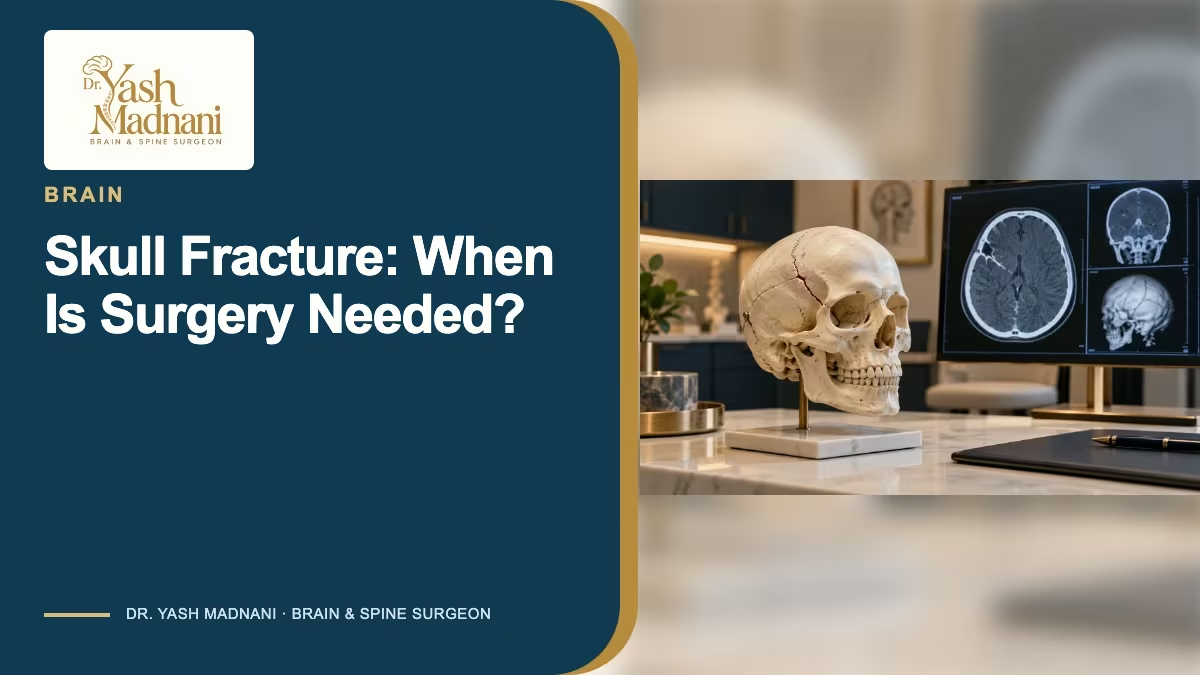
Some uncomplicated skull fractures can be managed without an operation after assessment. Treatment depends on the fracture pattern, wound and any injury inside the skull, not the fracture label alone.
A skull fracture found after an accident can sound alarming, especially when the injured person is awake and speaking. Families often ask whether the broken bone must be operated on immediately. The answer depends on the fracture and any injury beneath it.
For patients needing skull fracture treatment in Indore, Dr. Yash Madnani is a neurosurgeon in Indore who evaluates brain and head injury concerns. A suspected serious head injury should first be assessed in an emergency department. Surgical decisions follow the examination and scans, not the appearance of the wound alone.
What types of skull fracture can occur?
A skull fracture is a break in one of the bones protecting the brain. Doctors describe fractures according to their pattern and location.
| Fracture type | What it means |
|---|---|
| Linear fracture | A crack without major inward displacement of the bone |
| Depressed fracture | A section of bone is pushed inward |
| Open fracture | A wound communicates with the fracture |
| Skull base fracture | The break involves bones at the base of the skull |
These categories can overlap. An open fracture may also be depressed, and the treatment must account for both features.
How are skull fractures and brain injuries related?
The bone injury and the brain injury are related but different. A fracture may be accompanied by bleeding, bruising or other damage inside the skull. Conversely, significant brain injury can occur without a skull fracture.
Being able to speak after the accident does not rule out a serious problem. The team considers alertness, neurological function and scan findings together.
When discussing head injury treatment in Indore, ask what the scan shows about the brain as well as the bone. This explains why two apparently similar fractures may receive different treatment plans.
Why might a CT scan be needed after a head injury?
A CT scan is commonly used in significant head trauma because it can identify fractures and bleeding quickly. MRI may be considered later for particular questions, but it does not replace the initial emergency assessment.
The medical team also asks about the accident, any loss of consciousness and medicines such as blood thinners. Share the time of injury and any changes noticed afterwards.
Bring previous medical information if available, but do not delay emergency care while collecting documents. New findings or a change in the patient's condition may require reassessment.
When Is Skull Fracture Surgery Needed?
Surgery may be required for selected depressed or open fractures, particularly when there is significant inward displacement, contamination, damage to the protective brain covering or an associated blood collection needing treatment.
The purpose may be to clean the wound, reposition depressed bone or treat the injury beneath the fracture. The exact procedure depends on what the team finds.
The decision is more detailed than measuring a crack. Location, wound condition and neurological findings all matter. An experienced brain surgeon in Indore can explain whether the proposed operation is directed at the fracture, the brain injury or both.
Can a Skull Fracture Heal Without Surgery?
Some uncomplicated linear fractures can be managed without an operation. Selected closed depressed fractures may also be suitable for nonsurgical care after specialist assessment.
This does not mean ignoring the injury or deciding independently to stay at home. The patient may need observation and instructions about further review.
Families should ask why nonsurgical treatment is appropriate, what changes require urgent attention and whether another scan or appointment is planned. The explanation should relate to the actual injury rather than a general rule about all fractures.
Head Injury Warning Signs
Seek emergency help after a head injury for:
- Difficulty staying awake or worsening confusion.
- A seizure or new weakness.
- Repeated vomiting.
- Problems with speech, walking or vision.
- Clear fluid or bleeding from the ears.
- A visible dent or penetrating head wound.
Do not press on a dent, remove an embedded object or let the injured person drive themselves to hospital. These signs need medical assessment rather than home treatment.
What should you ask the neurosurgeon?
Ask whether there is bleeding inside the skull, whether the fracture is open or depressed and what the immediate treatment aims to prevent. If surgery is recommended, request an explanation of the procedure and its risks.
After assessment, obtain written instructions. One family member can keep the reports and note important updates so information is available during transfers or subsequent appointments.
Conclusion
A skull fracture does not always require surgery, but it always needs appropriate assessment. For specialist head injury and skull fracture treatment in Indore, Dr. Yash Madnani, top brain surgeon in Indore, can review the findings and surgical needs. In an acute accident, emergency hospital care comes first; the fracture pattern and associated brain injury then guide treatment.
Frequently Asked Questions
Does every skull fracture require surgery?
No. Some uncomplicated fractures can be managed without an operation after assessment. Treatment depends on the fracture pattern, wound and any injury inside the skull, not the fracture label alone.
What is a depressed skull fracture?
A depressed fracture involves bone pushed inward. Its significance depends on the displacement and associated injuries. Specialist assessment determines whether surgical treatment or another approach is appropriate.
Can a linear skull fracture heal without surgery?
Some uncomplicated linear fractures are managed nonsurgically. The team must first assess for associated brain injury and provide instructions for observation or follow-up. Do not decide on home care independently.
What is an open skull fracture?
An open skull fracture has a wound communicating with the fracture. Wound contamination and associated damage influence treatment. These injuries need prompt hospital assessment rather than routine home wound care.
Is a skull fracture the same as a brain injury?
No. One affects bone; the other affects the brain. They can occur together, but a person may also have significant brain injury without a skull fracture.
Why is a CT scan used after head trauma?
CT can quickly identify skull fractures and bleeding inside the head. It is commonly used in significant trauma, while further imaging is selected according to the examination and clinical questions.
Can someone speak normally despite a serious head injury?
Being awake and speaking does not exclude significant injury. Doctors assess alertness, neurological function and scans together. Worsening symptoms after the accident require reassessment.
Which signs need emergency help after a head injury?
Difficulty staying awake, seizures, new weakness, repeated vomiting or problems with speech and walking need urgent hospital assessment. Clear fluid from the ears or nose is also concerning.
Can I treat a suspected skull fracture at home?
No. A suspected skull fracture needs medical assessment. Do not press on a dent or remove an embedded object. Seek emergency help for a significant injury or concerning symptoms.
How can I arrange skull fracture assessment in Indore?
Acute head trauma should first be assessed in an emergency department. For subsequent neurosurgical review in Indore, consult Dr. Yash Madnani with the scans, discharge summary and treatment records.